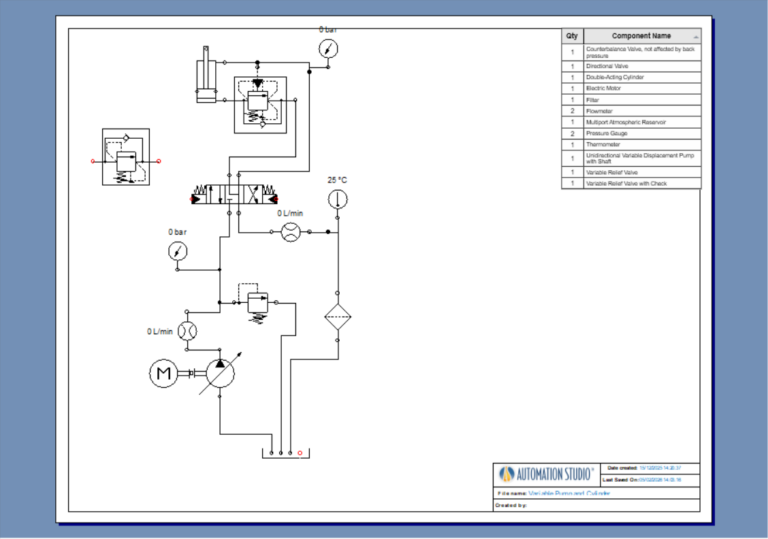
Recently we used simulation of a hydraulic circuit in a hydraulic systems training course. This is the first time we have used the programme for training. In this instance we compared the efficiency of a circuit using a relief valve and then a counterbalance valve to control the lowering of a hydraulic cylinder under load. This visually helped demonstrate why counterbalance valves are used.
At MGR Fluid Engineering, we approach training differently; we visit our customer’s sites and train them on their hydraulic systems. Most of our courses have a standard format, with additional focus on the subjects and systems that our customers need training on.
Simulation of hydraulic circuits is another tool that we can use during training. The components in the system can be set to the characteristics of actual hydraulic components making the simulation realistic to the live hydraulic system operation.
I tried a simulation on a hydraulic circuit that had a problem with the hose burst valve activating when lowering the cylinder. I had some data form the original tests in the form of flow rate from a fitted flowmeter. The simulation predicted flowrates from the cylinder very similar to that seen during trials and the firing of the hose burst valve. As with anything else what you put in; set up of the hydraulic components characteristics is important for accuracy.
We will keep developing our simulations and know they can be used for predicting the characteristics of actual hydraulic systems so that pressure drops and heat generation can be accurately predicted.
To learn more about our full training services, visit our main page for Hydraulic Training Courses.