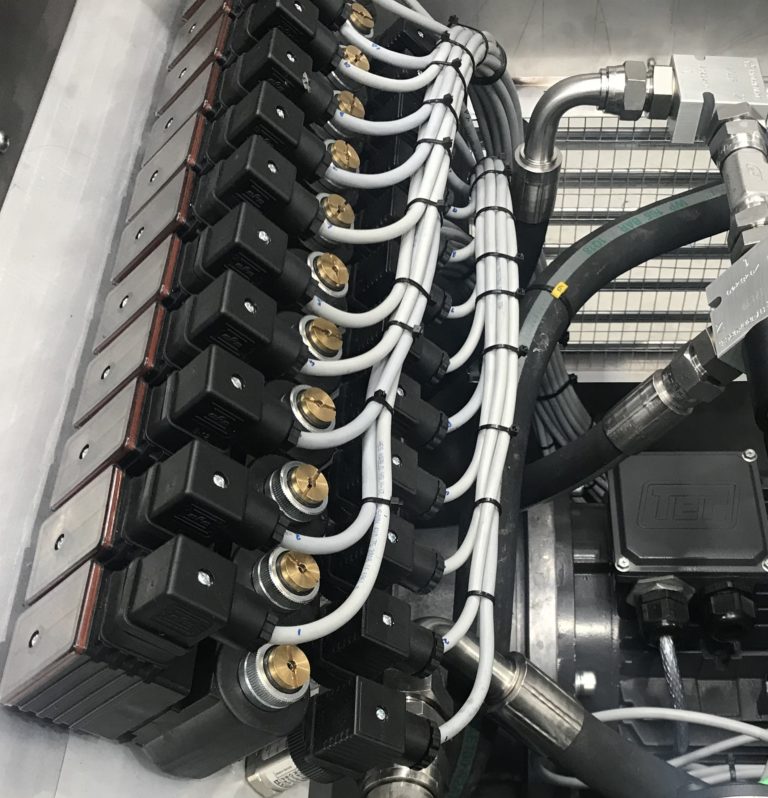
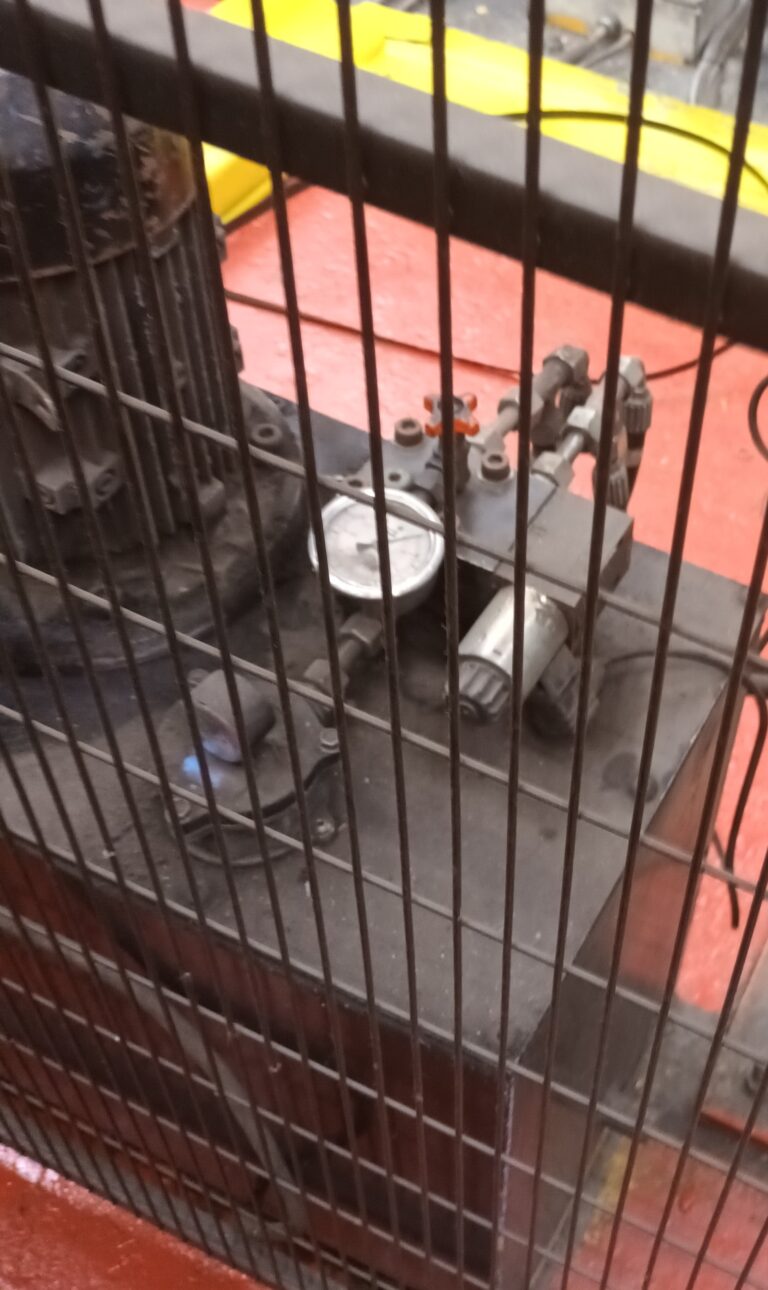
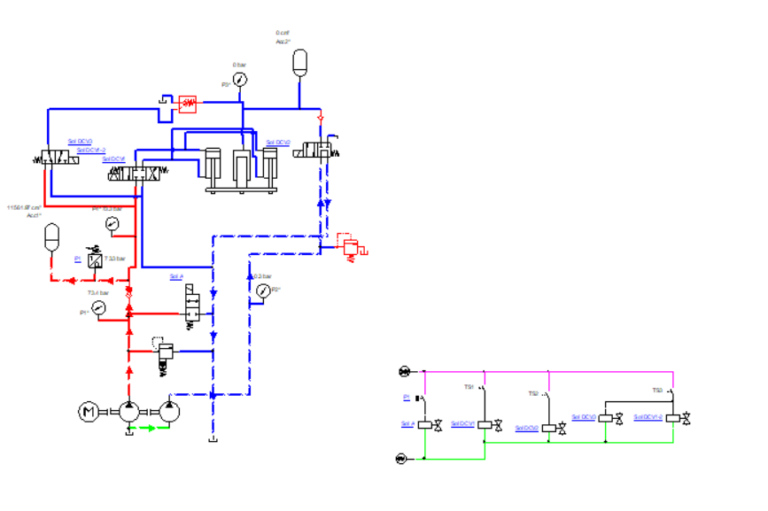
When designing and building a hydraulic system the risks to the end user must be understood. and mitigated. Compliance with BS EN ISO 4413:2010 is advisable as it details best practice in terms of selection of components and the overall design of the hydraulic system. I still see systems with no pressure gauges fitted, which makes it difficult to ensure the system is depressurised for maintenance. Also hydraulic schematics are not updated so maintainers of the system are placed further at risk.
Having a system that is maintainable certainly reduces the risk to those maintaining hydraulic systems. In terms of hydraulic systems I see, there is a lack of test points and isolation valves. One big risk in hydraulics is trapped in pressure left in the hydraulic circuit when the system is shut down. Pressure can become trapped behind check valves, counterbalance valves and solenoid valves. Some applications require pressure to be locked in, for example to keep cylinders in position. Maintaining these cylinders and the system connecting to it will require a process to ensure the cylinder is lowered to its lowest position and the trapped pressure can be vented.
There are other risks with failing components, moving cylinders and motors, and oil release.
Besides a well designed and manufactured hydraulic system, hydraulic system safety needs to be considered for those using and maintaining hydraulic systems. At MGR Fluid Engineering we are well aware of the risks and how to mitigate them. If you need and assessment of the hydraulic system safety or need training please give us a call.